How Digital Tools Are Transforming the Home Buying Experience
Table of Contents
- The Rise of Digital Platforms and Mobile Apps
- Virtual and Augmented Reality: A New Dimension in Home Tours
- Artificial Intelligence: Personalizing the Search
- Blockchain: Enhancing Transparency and Security
- Cloud-Based Tools: Streamlining Property Management
- Big Data: Informing Decisions
- Environmental Impact: A Greener Approach
- Conclusion
The Rise of Digital Platforms and Mobile Apps
The way people search for homes has evolved dramatically with the adoption of digital platforms. Today, most buyers begin their journey online—using sites like Zillow®, Realtor.com®, and Redfin® to explore property listings, access high-resolution images, and even schedule showings virtually. These platforms provide a wealth of data and intuitive interfaces, allowing users to filter, compare, and track properties efficiently.
For buyers working with a knowledgeable Fairfax County, VA, real estate agent Cheryl Folmer, these resources now supplement rather than replace expert insights, empowering individuals throughout the home-buying process.
Mobile apps have further streamlined the search, sending real-time notifications when new homes hit the market or prices drop. Many platforms integrate mapping technologies, enabling buyers to assess neighborhoods, commute times, and proximity to amenities. This accessibility reduces the burden of in-person visits for properties that may not meet the buyer’s needs, optimizing time and resources.
The comprehensive nature of online property databases means buyers can make more informed decisions—armed with data on recent sales, historical pricing, and even community demographics. This abundance of accessible information guides everything from initial searches to offer strategies and negotiation.
The shift to digital tools also benefits sellers and agents, with enhanced listing exposure and innovative ways to showcase homes to a broader audience—regardless of geographic boundaries.
Virtual and Augmented Reality: A New Dimension in Home Tours
Virtual reality (VR) and augmented reality (AR) have introduced a new dimension to home tours, especially vital in a post-pandemic world prioritizing convenience and safety. VR showings enable buyers to experience an immersive, 360-degree walkthrough of a home from anywhere, creating a true sense of space and layout. AR, meanwhile, allows for interactive overlays—visualizing redesign ideas or virtually staging rooms in real time.
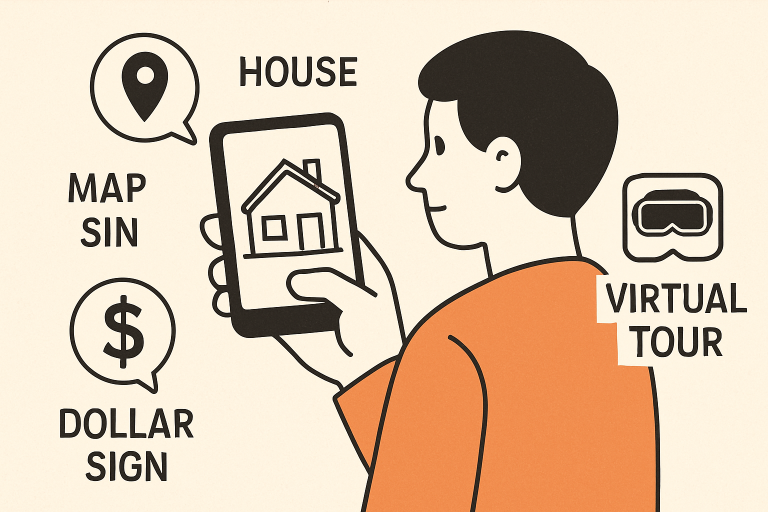
These experiences not only save travel time but also empower buyers to narrow down options before any physical visit. For international and out-of-town buyers, VR and AR have become invaluable, reshaping how relocation and investment purchases happen.
Artificial Intelligence: Personalizing the Search
Artificial intelligence (AI) has become a driving force in personalizing the home-buying experience. Advanced algorithms not only analyze buyer preferences and behaviors but also predict suitable property matches, customize recommendations, and automate messaging for timely responses. AI chatbots now answer common buyer questions and can guide clients through each stage of the purchasing journey.
By leveraging machine learning, real estate platforms help buyers discover hidden gems that might otherwise be overlooked. Additionally, AI tools detect subtle patterns—suggesting areas with expected appreciation or identifying advantageous times to buy. For agents and sellers, AI-powered analytics refine marketing campaigns and optimize listing strategies.
Blockchain: Enhancing Transparency and Security
Blockchain technology is on track to revolutionize real estate transactions by ensuring data integrity, transparency, and security. As McKinsey explains, blockchain is a distributed database that enables secure information sharing across a network, with transactions recorded permanently and immutably in a digital ledger. With blockchain-based smart contracts, property deeds and ownership records are stored securely and can be verified instantly. This reduces the need for intermediaries, streamlines the closing process, and lowers the risk of fraud.
For buyers, this means added confidence in the authenticity of titles and the legitimacy of ownership transfers. Sellers benefit by eliminating much of the paperwork and uncertainty that can delay deals. Blockchain is increasingly being adopted for mortgage processing, title registration, and even fractional real estate investments, offering new, more secure pathways for buyers and investors alike.
Cloud-Based Tools: Streamlining Property Management
Modern property management has shifted from filing cabinets and endless paperwork to seamless, digital-first processes powered by cloud technology. Real estate professionals now manage leases, documents, and communications through integrated cloud platforms, allowing for instant access to critical information from any device.
Buyers and tenants benefit as well, with streamlined application processes, digital document signing, and transparent maintenance tracking. Cloud tools also foster better collaboration between agents, lenders, title companies, and other stakeholders, shortening timelines and improving client satisfaction.
Big Data: Informing Decisions
The marriage of real estate and big data has enabled predictive analytics to inform every phase of the home-buying journey. By processing and analyzing patterns in large datasets such as sales history, neighborhood statistics, and buyer preferences, big data tools deliver insights that guide more strategic decisions, according to Investopedia. This allows buyers to understand long-term property value trends, while sellers can better time their listings. Real estate professionals use these analytics to develop pricing strategies and tailor marketing for maximum impact.
Environmental Impact: A Greener Approach
The digitization of the home-buying process supports sustainability by reducing reliance on printed materials and lowering travel-related emissions. Virtual tours, electronic documentation, and cloud management collectively decrease the overall carbon footprint of each transaction. This aligns with an increased public demand for green, environmentally conscious solutions in all sectors—including real estate.
Conclusion
Digital tools have changed every aspect of the home-buying process—making it more accessible, efficient, and client-centered than ever before. As technologies such as AI, VR, and blockchain continue to advance rapidly, those embarking on a home-buying journey can anticipate an even smoother, more transparent, and more personalized experience in the years ahead.